London to Italy All-Inclusive Rail Holiday Packages: 2026 Guide
Planning a rail holiday from London to Italy in 2026 is no longer a niche idea reserved for slow-travel enthusiasts; it is becoming a practical alternative for travellers who want comfort, scenery, and city-centre arrivals. All-inclusive packages simplify a journey that can otherwise involve multiple operators, fare rules, and hotel choices. This guide explains what these packages usually include, how routes compare, and where the real value often lies before you book.
This article follows a simple outline so you can compare options quickly before looking deeper.
- What an all-inclusive rail package usually means on a London to Italy trip.
- Which routes and destinations tend to work best for different travel styles.
- What is commonly included, what is often excluded, and how pricing usually behaves.
- How to book well for 2026, from timing and documents to station transfers and seat choices.
- Which package types suit couples, families, solo travellers, and comfort-first holidaymakers.
What “All-Inclusive” Really Means for a London to Italy Rail Holiday
In rail travel, the phrase all-inclusive needs careful reading. It rarely means the same thing as a resort package where nearly every meal, drink, and activity is built into the price. For a London to Italy rail holiday, it usually means that the core parts of the journey have been bundled together for convenience: international train tickets, any required onward rail connections, hotel accommodation, and sometimes breakfast, transfers, or a city tour. That makes the trip easier to manage, especially when several rail operators are involved and timing matters. It also reduces the stress of piecing together separate bookings, which can become complicated if there is a schedule change or delay.
That convenience is the main reason these packages are gaining attention. A self-booked trip can absolutely be cheaper in some cases, particularly for experienced rail travellers who know when booking windows open and are comfortable changing stations in Paris or navigating Italian rail systems on the fly. But a package can add value in quieter ways. It may include protected connections, clearer support if disruption occurs, thoughtfully chosen hotels near stations, and route planning that avoids awkward layovers. When you are crossing multiple countries, small details often matter more than people expect. A 20-minute gap that looks efficient on paper can feel very different when you are rolling a suitcase through a busy station.
Most London to Italy packages include some combination of the following:
- Eurostar travel from London to mainland Europe
- Reserved onward rail seats to Italian destinations
- Hotel stays in one or more cities
- Breakfast at the hotel
- Sometimes station transfers or local transport cards
- Occasionally guided excursions or attraction tickets
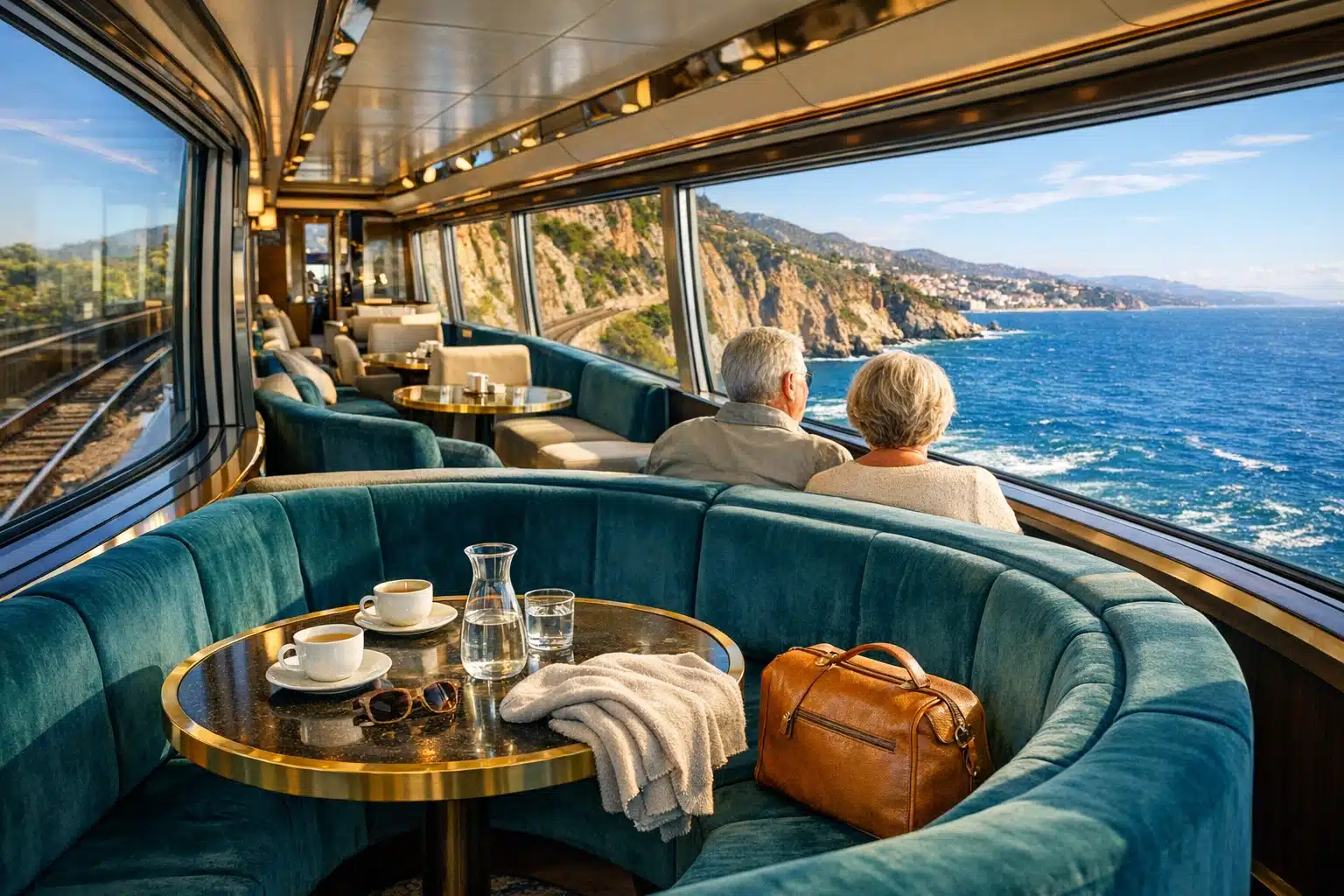
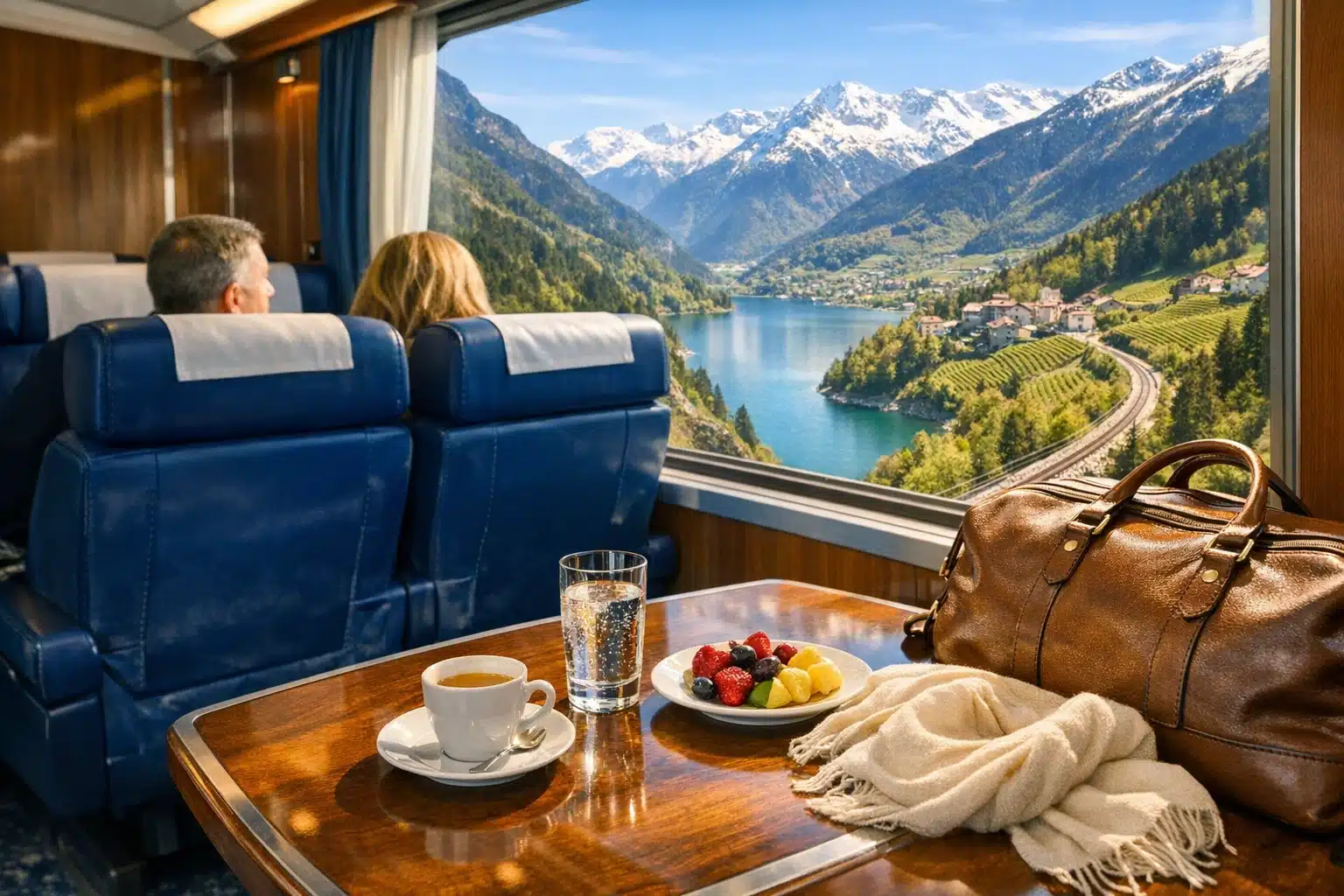
There are also trade-offs. Rail from London to Italy is usually slower than flying, and that is not a flaw so much as a different travel philosophy. The point is not only arrival; it is the experience in between. The Alps do not simply appear beneath a wing and vanish again. By train, they unfold in layers: industrial suburbs give way to vineyards, plains lift toward mountain walls, and tunnels suddenly open onto bright lakes and steep villages. For many travellers, that shift transforms the route from logistics into memory.
Another reason rail matters in 2026 is practical geography. Trains arrive in city centres, while airports often sit far outside them. Once airport transfers, early check-in, baggage rules, and security are factored in, the time comparison between air and rail can narrow more than first-time travellers assume. Rail can also feel gentler: more luggage freedom, fewer hard edges to the day, and a more continuous sense of travel. A strong package should build on those strengths rather than simply rebundle tickets at a higher price. The key question is not whether a package is automatically worth it, but whether it removes enough complexity to justify the premium.
Comparing the Main Routes from London to Italy and the Destinations They Suit
Not every London to Italy rail holiday follows the same logic, and the best route depends on what kind of holiday you actually want. The most common framework begins with Eurostar from London St Pancras to Paris Gare du Nord, followed by a transfer across Paris for onward travel into Italy or toward Switzerland. That first leg is quick and efficient, but the Paris transfer is often the hinge on which the whole day turns. Some packages include a transfer between stations, while others expect you to handle it independently. If you are carrying heavy luggage, travelling with children, or simply prefer a calmer pace, that single detail can shape how comfortable the journey feels.
For travellers focused on efficiency, Milan is often the most practical Italian gateway. It is one of the easier major cities to reach by rail from London, and it works well as both a destination and a launch point. From Milan, it is straightforward to continue to Lake Como, Verona, Florence, Venice, or even onward to Rome. Turin can also be an appealing first stop, especially for travellers who want a less crowded city with elegant architecture, strong food culture, and shorter onward rail distances than a deeper route into Italy. Milan and Turin are often good choices for first-time rail visitors because they balance accessibility with clear onward connections.
Venice, Florence, and Rome are often more rewarding when built into a package with either a stopover or a carefully timed continuation. While it is possible to travel deep into Italy in a long single day, many travellers enjoy the holiday more when the route breathes a little. A one-night stay in Paris, Lyon, Geneva, Lausanne, or Zurich can turn a demanding transit day into a multi-centre experience. The practical benefit is obvious: less rushing, fewer fragile connections, and more energy when you arrive. The emotional benefit is harder to quantify but easy to feel. Suddenly the trip has rhythm.
A few route styles stand out in 2026 planning:
-
London to Milan or Turin for a short city break: efficient, manageable, and often the easiest package structure.
-
London to Italian Lakes via Milan: ideal for scenic travel with a relaxed pace and strong hotel options.
-
London to Venice or Florence with a Paris or Swiss stopover: excellent for travellers who want the route itself to be part of the story.
-
Longer multi-centre itineraries including Milan, Florence, and Rome: better for one-week-plus holidays than quick escapes.
The Swiss approach deserves special mention because it changes the mood of the journey. Routing through Switzerland may add planning complexity, but it can also deliver some of the most memorable scenery in European rail travel, especially if the package includes panoramic sectors or lakefront stopovers. Travellers who value views, comfort, and gradual transitions often prefer it to the fastest path south. Those who want a simple first rail holiday may prefer the directness of Milan first, then onward movement inside Italy. In other words, the right route is less about prestige and more about travel temperament: do you want the shortest workable line, the most scenic arc, or a balanced blend of both?
What Is Usually Included, What Costs Extra, and How to Judge Value in 2026
The smartest way to compare all-inclusive rail holiday packages is to look beyond the headline price. Two offers may appear similar at first glance, yet deliver completely different levels of value. One may include standard-class rail, a three-star hotel on the edge of town, and breakfast only. Another may offer first-class seating on longer legs, a centrally located four-star hotel, airport-style station transfers, and a guided excursion. Both are technically packages, but they serve different needs. The difference becomes especially important on a London to Italy journey because accommodation quality, transfer ease, and seat reservations can all affect the experience in visible ways.
Typical package inclusions often cover the essentials well. You will usually see return rail travel from London, hotel stays, and at least some reserved seating. Breakfast is common, especially in city hotels. Some packages also include one or more of the following:
- Private or shared transfers between stations and hotels
- Hop-on-hop-off bus tickets or city cards
- Entry to a major attraction
- A lake cruise, walking tour, or wine-region excursion
- Rail travel between multiple Italian cities
Just as important are the things that may not be included. City taxes in Italy are often paid locally at the hotel. Lunches, dinners, optional museum entries, checked luggage services, and seat upgrades may all cost extra. Some packages call themselves all-inclusive even when local transport or Paris station transfers are excluded. That does not make them poor offers, but it does mean the traveller needs to read the terms carefully. A package that looks cheaper can quickly lose its advantage if you need to add private transfers, premium seats, or an extra hotel night to make the timings comfortable.
For 2026 budgeting, it is often more useful to think in bands rather than fixed promises. A short rail city break of three to four nights with standard hotels may sit in the lower four figures per person on a twin-share basis, especially in shoulder season. A mid-range six- or seven-night package with stronger hotel locations and more generous rail arrangements usually climbs higher. Premium itineraries, especially those involving luxury hotels, scenic stopovers, or first-class rail on several legs, can move well beyond that. Peak travel periods such as school holidays, Easter, high summer, and late-December festive weeks normally push prices upward.
Value also depends on who is travelling. Couples may place a high premium on hotel location and smooth transfers. Families may care more about room size, fewer hotel changes, and train times that do not require dawn departures. Solo travellers often need to watch the single supplement, which can materially change the package cost. Older travellers or anyone with reduced mobility may find excellent value in assistance arrangements, station proximity, and lighter connection pressure. In other words, the best-priced package is not necessarily the one with the lowest number on the screen; it is the one that reduces the right kind of friction for the person taking the trip.
How to Book a London to Italy Rail Package for 2026 Without Unpleasant Surprises
Booking well is partly about timing and partly about asking better questions. Rail inventory often opens in stages, and international segments may become available on different dates depending on the operator. That means packages can appear, disappear, and be repriced as suppliers build their 2026 programmes. If your dates are fixed, especially around school holidays or major events, earlier research usually gives you more choice in departure times and hotel categories. If your schedule is flexible, even shifting by a day or two can improve both comfort and price. On a route with multiple rail legs, flexibility is often more valuable than chasing the absolute lowest advertised fare.
One of the most overlooked issues is the Paris connection. Many London to Italy itineraries require a transfer between Paris stations, commonly from Gare du Nord to Gare de Lyon. On paper this sounds simple, and in broad terms it is. In practice, it is a real urban transfer with luggage, traffic, and the normal unpredictability of a large city. Ask whether your package includes a taxi transfer, a driver, metro instructions, or enough time to make the move comfortably. That line in the itinerary may be less glamorous than a lakeside hotel photo, but it can be the most important detail in the booking.
Before confirming a package, check the following points carefully:
- Are all train seats reserved, or only some of them?
- Is the Paris transfer included and protected?
- How close is the hotel to the station or historic centre?
- Are breakfast, city taxes, and local transport clearly stated?
- What happens if a rail delay causes a missed connection?
- Can the package accommodate dietary, accessibility, or room-type requests?
It is also wise to review entry and travel requirements shortly before departure. UK travellers should check current passport validity rules and any European border system updates that may be in force in 2026, including the rollout of systems such as EES or ETIAS if applicable at the time of travel. Do not assume that last year’s advice still applies. Travel insurance is equally important on a multi-country rail journey because delays, missed connections, and medical issues can affect several booked elements at once.
Finally, match the package to your energy level, not just your ambition. A route that looks heroic online can feel exhausting in real life if it involves an early Eurostar, a cross-Paris transfer, and a late arrival in Florence with one more walk to the hotel. There is no medal for making your holiday harder than it needs to be. Often the better booking is the one that includes an extra night in Paris or Milan, a later departure, or a hotel five minutes from the station. Rail rewards good pacing. When the plan gives you room to move, the journey starts feeling elegant rather than merely efficient.
Conclusion: Which London to Italy Rail Holiday Package Fits You Best in 2026?
If you are deciding whether a London to Italy all-inclusive rail holiday is right for you in 2026, the answer depends less on rail enthusiasm and more on the style of trip you want. For first-time rail travellers, the most sensible packages are usually the simplest ones: London to Milan or Turin, perhaps with one carefully chosen hotel and a few nights to settle in. These itineraries keep the connection pattern manageable and still deliver the pleasures that make rail appealing in the first place: city-centre arrival, generous views, and a journey that feels continuous rather than fragmented. They are practical, not timid, and that makes them a strong starting point.
For travellers who care about atmosphere and scenery, a package with a stopover often offers the best balance. Breaking the route in Paris, Switzerland, or another well-connected city can turn a long travel day into a richer holiday with better pacing. If the idea of gliding toward Italy through changing landscapes appeals to you more than simply reaching the hotel quickly, a multi-centre rail package may be the most rewarding choice. Couples often enjoy this format because it adds contrast without constant repacking. Slow travellers, photographers, and anyone who likes the romance of the route itself usually feel the same way.
Families and comfort-first travellers should look for fewer changes, realistic transfer times, and hotels that are easy to reach on arrival. A slightly shorter itinerary with stronger logistics often produces a much better holiday than a crowded schedule filled with “must-see” cities. Solo travellers may benefit from packages that reduce the mental load of independent booking, though it is worth checking the single supplement carefully. Premium travellers should focus on what the extra spend actually buys: room quality, station transfers, better train seating, and lower-stress connections are usually more valuable than decorative extras.
The main takeaway is simple. A good 2026 package should not merely bundle transport and hotels; it should shape the trip in a way that makes rail feel coherent, comfortable, and worth choosing over the alternatives. Read the itinerary closely, compare what is included, and pay special attention to transfer design, hotel location, and connection protection. When those pieces line up, rail from London to Italy becomes more than a route on a map. It becomes a holiday with a beginning, a middle, and an arrival that already feels earned. For travellers who want a more thoughtful way to cross Europe, that is exactly the point.