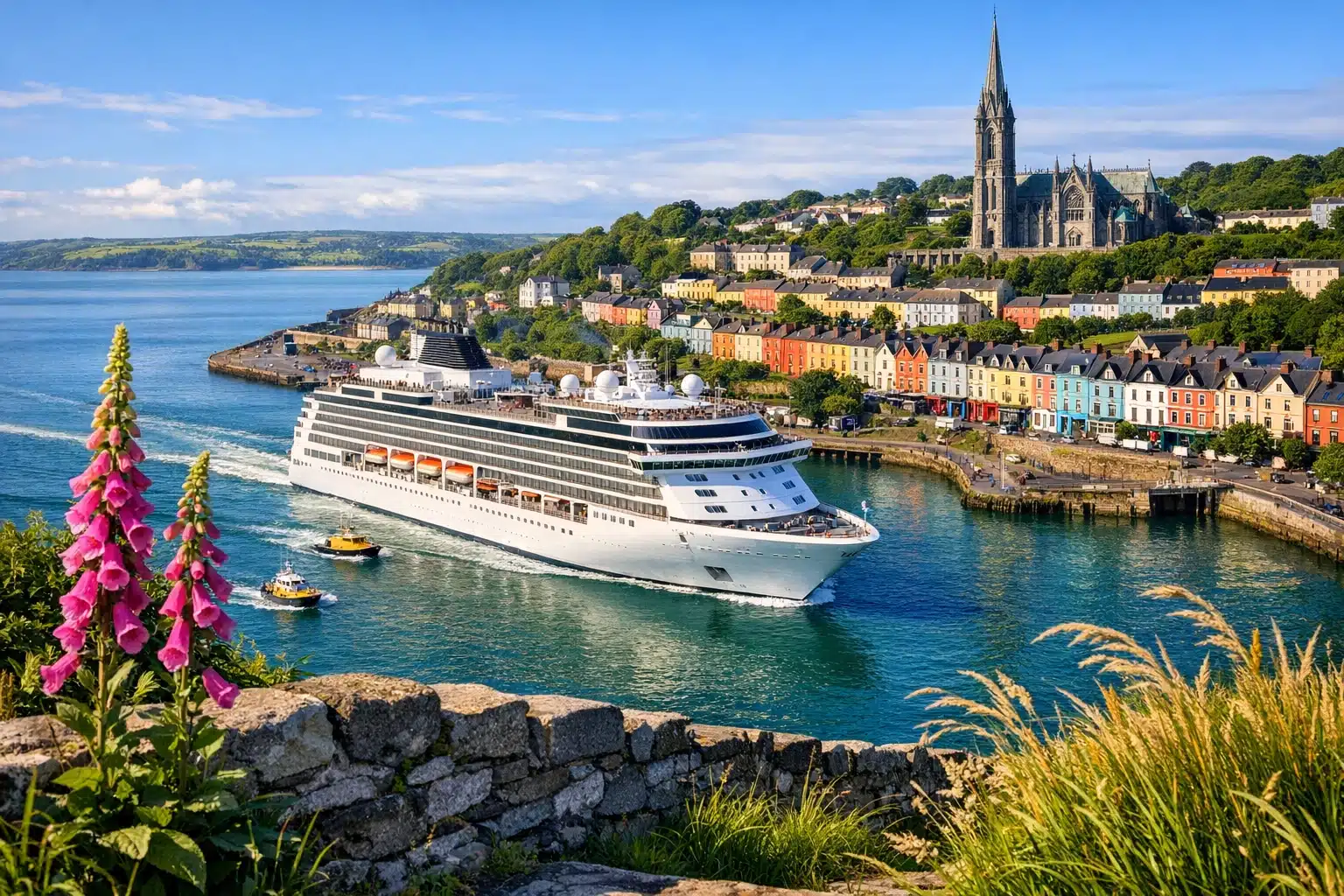
4-Night All-Inclusive Cruises Around Ireland: What to Expect
A 4-night all-inclusive cruise around Ireland sits in a sweet spot for travelers who want sea views, historic ports, and a simpler booking process without giving up an entire week. That makes it especially relevant for couples, first-time cruisers, and busy professionals chasing a compact break with fewer moving parts. Yet the phrase all-inclusive can hide important differences in fares, drinks, excursions, and port time, which is why setting realistic expectations before booking is so useful.
Outline: How This Guide Breaks Down a 4-Night Irish Cruise
Before diving into the fine print, it helps to map the subject clearly. A short cruise around Ireland sounds wonderfully straightforward: board the ship, unpack once, enjoy the coast, and let the itinerary come to you. In practice, however, a four-night sailing is shaped by geography, port access, weather, and the commercial style of the cruise line. That is why this guide is organized around the questions most travelers actually ask before booking.
- What a 4-night cruise around Ireland usually looks like in real life
- Which ports are most commonly included and which are less likely on a short schedule
- What all-inclusive normally covers, and where extra costs often appear
- What onboard life feels like compared with a land-based trip
- How to judge value, plan well, and decide whether this format suits your travel style
The first important point is one that many brochures only hint at: a 4-night cruise is usually a sampler, not a full circumnavigation of Ireland. Ireland’s coastline is long, varied, and spread across busy shipping lanes and weather-exposed harbors. In four nights, most itineraries cannot comfortably deliver a complete loop with deep exploration on every side of the island. Instead, these voyages tend to focus on two or three ports, often on the east, south, or north coast, with one sea period connecting them.
That does not make the trip less worthwhile. In fact, for a certain kind of traveler, the shorter format is the entire appeal. It reduces time off work, lowers the mental load of planning, and can offer a more predictable budget than stitching together trains, hotels, meals, and taxis across several Irish cities. If you are curious about cruising, it also serves as a low-commitment trial run. You get the shipboard rhythm, the dining schedule, the morning-port excitement, and the practical reality of sea travel without signing up for a ten-night voyage.
Think of it as a tasting menu rather than a banquet. You may not leave with the whole island memorized, but you can still come away with vivid impressions: the curve of Dublin Bay at dawn, the harbor approach into Cobh, or the industrial-meets-historic drama of Belfast. The rest of this article expands each part of that picture so you know what to expect, what to question, and what kind of traveler is likely to enjoy the experience most.
Realistic Itineraries and Ports You Are Most Likely to See
The biggest expectation to set early is that “around Ireland” is often a marketing phrase with some flexibility. On a 4-night cruise, the itinerary usually circles part of Ireland or visits Irish ports on a compact regional route rather than completing a true, leisurely lap of the island. That difference matters because it affects both scenic variety and time ashore.
Common embarkation points include Dublin, Belfast, and ports in Great Britain such as Liverpool or Southampton, depending on the operator. Once underway, the most realistic Irish calls for a short itinerary are ports with established cruise infrastructure and efficient access to major sights. Among the ports you are most likely to encounter are:
- Dublin or Dun Laoghaire, for city landmarks, literary history, and coastal views
- Cobh, the usual gateway for Cork, Blarney, and parts of County Cork
- Belfast, with easy access to the Titanic Quarter and Northern Irish day tours
- Waterford, on some schedules, for history, craft heritage, and southeast scenery
- Killybegs, less common but valuable as an entry point to Donegal’s rugged landscapes
Each port creates a different version of the holiday. Dublin gives you urban energy and walkable attractions. Cobh has a gentler visual mood, with colorful hillside streets and a harbor that feels cinematic in changing light. Belfast brings a stronger industrial and political history, along with an efficient cruise terminal area and shore options that can stretch from museums to the Giant’s Causeway region, though the latter makes for a longer day.
Because the trip is short, shore time is often selective rather than expansive. You might get two long port calls and one shorter visit, or three compact stops shaped by tide windows and sailing distances. Weather can also alter the plan. Ireland’s cruise season is generally most active from late spring through early autumn, when coastal temperatures often sit in the rough range of 10 degrees Celsius to 18 degrees Celsius. Even then, wind and swell can affect tender operations or the comfort of exposed sea stretches.
For that reason, it helps to compare itinerary styles rather than only ports:
- An east-and-south sampler often feels most balanced for city access and manageable sailing times
- A northern route can feel more dramatic and less crowded, but sometimes more weather-sensitive
- A roundtrip from a British port may include less time in Ireland overall, though it can simplify airfare for some travelers
If your goal is to deeply explore Galway, Kerry, Donegal, Cork, and Belfast all in one go, a 4-night cruise will feel too compressed. If your goal is to enjoy a polished, coastal introduction with a few memorable landings, it can work very well. The ship does not deliver all of Ireland; it opens a few doors and lets the coastline do the talking in between.
What All-Inclusive Usually Covers, and What It Often Does Not
The phrase all-inclusive is one of the most attractive in travel marketing, and one of the most slippery. On cruises, it rarely means exactly the same thing from one operator to another. That is especially true on short regional itineraries, where packages may be bundled for promotional reasons rather than built into a fully luxury-style fare. In other words, you should not assume that two “all-inclusive” 4-night cruises around Ireland provide identical value.
In the broadest sense, most cruise fares already include your cabin, main dining venues, standard entertainment, and transport between ports. What changes is the layer of extras wrapped around that base. A short cruise advertised as all-inclusive may include some or all of the following:
- House drinks, or a beverage package covering selected wines, beers, and soft drinks
- Gratuities or service charges
- Wi-Fi, either basic access or a limited-device plan
- Specialty dining credits or upgraded restaurants on one night
- Onboard credit that can be used for drinks, spa treatments, or excursions
- In some premium cases, selected shore excursions
What often remains extra is just as important. Premium spirits, specialty coffee, bottled water in some settings, spa treatments, casino spending, boutique shopping, photography packages, and many organized excursions may still sit outside the fare. Port transfers can also be overlooked. If your ship docks outside the center of town, you may need to pay for a shuttle, taxi, or longer tour bus in order to make the most of your stop.
One practical way to evaluate value is to think in tiers. Mainstream lines often use “all-inclusive” to describe a bundle that removes the most common onboard charges, but still leaves optional spending in place. Premium lines may cover more drinks, better dining flexibility, and gratuities more consistently. Luxury lines, where available on short sailings, sometimes include almost everything except a few highly specific experiences, but those fares are typically much higher to begin with.
When comparing offers, look beyond the headline and ask direct questions:
- Are gratuities included for all guests?
- Does the drinks package apply all day, and are there price caps per drink?
- Is room service included or charged?
- How much internet access is actually part of the fare?
- Are shore excursions included, discounted, or fully extra?
- Do embarkation-day and disembarkation meals count?
This is where a careful booking approach can save real money. A cruise with a higher upfront fare may be better value if it includes drinks, tips, and Wi-Fi that you would buy anyway. On the other hand, a lower base fare may be smarter for travelers who drink little, stay offline, and prefer to explore ports independently. The key is not to chase the label. It is to match the package to your habits. On a short cruise, small pricing details can change the total surprisingly fast.
Onboard Atmosphere, Shore Excursions, and the Feel of the Journey
A 4-night cruise has a different rhythm from both a week-long voyage and a land-based road trip. It moves quickly, yet it can still feel relaxed because the logistics happen in the background. You unpack once, the room remains yours, dinner is already planned, and each morning offers a new shoreline without the repeated cycle of packing, checking out, and figuring out where to eat next. For travelers who value ease, this can be the strongest argument in favor of cruising around Ireland on a short schedule.
The onboard atmosphere depends heavily on the ship category. Mainstream ships often aim for broad appeal: live music, theater shows, bars, trivia, family-friendly spaces, and multiple dining options. Premium ships usually feel quieter and more grown-up, with more polished service and less emphasis on big-stage energy. Either way, a 4-night voyage tends to have a lively tempo because passengers know the trip is brief and want to make the most of it.
Cabin choice matters more than some first-time cruisers expect. If the weather is clear, an outside or balcony cabin can add a lot to an Ireland itinerary because coastal arrivals are part of the experience. Watching harbor traffic slide by with coffee in hand is one of those small travel moments that lingers. Still, interior cabins can be perfectly sensible for budget-minded travelers who plan to spend little time in the room.
- Interior cabins usually offer the lowest fare and best value for short stays
- Ocean-view cabins add daylight, which can make compact spaces feel larger
- Balcony cabins provide private scenery, but the premium is not always worth it in cooler weather
Shore excursions also shape the experience. In Cobh, many passengers head toward Cork city, Blarney Castle, or scenic drives through County Cork. In Belfast, tours may focus on Titanic Belfast, black cab political history tours, or the Antrim coast on longer outings. In Dublin, some travelers stay central and walk, while others use the stop to explore nearby coastal villages or museums. Independent exploration often works well in major ports, but organized excursions can be useful when the clock is tight and transport distances are longer.
The sensory side of the journey is easy to underestimate until you are on deck. A cold breeze off the Irish Sea can sharpen every color. Rain may pass in a curtain, then sunlight breaks through and the harbor suddenly looks painted rather than built. That is part of the appeal. Ireland by cruise is not only about attractions; it is about approaching the island from the water, where towns reveal themselves gradually and the landscape arrives like a story turning its pages one at a time.
Who Should Book a 4-Night Ireland Cruise? Planning Tips and Final Takeaways
A short all-inclusive cruise around Ireland is not the perfect answer for every traveler, but it can be a very smart choice for the right one. It suits people who want a compact holiday with controlled costs, moderate comfort, and a good mix of sightseeing and downtime. Couples celebrating a short break, first-time cruisers testing the format, retirees who prefer easier logistics, and busy travelers who cannot spare a full week are often the best fit.
It is less ideal for visitors who want deep immersion in Ireland itself. If your dream trip involves lingering in small towns, driving wild Atlantic roads, spending full days in traditional music pubs, or building a route around remote landscapes, a cruise may feel too structured. The ship sets the clock, not you. Port calls can be brisk, and even the most efficient excursion cannot fully replace staying overnight in the region you are exploring.
From a value perspective, the cruise can compare well with land travel, especially when you add up hotel rates, intercity transport, dining, and the hidden cost of convenience. In high season, a short city-to-city Irish trip can become expensive quite quickly. A cruise bundles transport, accommodation, and meals into one framework. That predictability is useful. Still, the best-value booking is rarely the cheapest headline fare. It is the sailing whose included features match the way you actually travel.
When planning, a few habits make a noticeable difference:
- Check the exact port list and port times, not just the itinerary title
- Read the fare inclusions carefully before assuming drinks or excursions are covered
- Compare the cost of a drinks package against your real consumption, not your holiday mood
- Pack for changeable weather, including a waterproof layer and shoes with grip
- Arrive a day early if flying in, especially for embarkation from a busy city or international gateway
- Choose excursions selectively so you do not spend the whole cruise rushing from bus to ship
For many travelers, the smartest mindset is to treat a 4-night Ireland cruise as an introduction rather than a definitive island journey. It gives you polished convenience, changing coastal scenery, and enough port variety to spark curiosity for a future return. You will see snapshots, not the whole album. Yet snapshots can be powerful when they are well chosen.
So, who is the target audience for this kind of trip? Travelers who want a manageable, engaging, low-fuss break are likely to get the most from it. If you are drawn to the idea of waking up near a new harbor, dining without daily planning, and sampling Irish history and scenery in a few concentrated days, this format can be a strong match. Go in with realistic expectations, compare inclusions with care, and a short cruise around Ireland can feel less like a compromise and more like a clever way to travel.