3-Night Cruises Departing from Brest
A 3-night cruise departing from Brest sits in a sweet spot between a full holiday and a weekend escape. It gives travelers enough time to settle into life at sea, sample a new destination, and return without using too many vacation days. For readers comparing short breaks in western France, Brest is especially relevant because it combines Atlantic access, manageable port logistics, and a calmer boarding experience than many larger terminals. This guide explains how these mini-cruises work, what they tend to cost, and which travelers are most likely to enjoy them.
Outline: Why Brest Matters and What This Guide Covers
Brest is not always the first name that appears in conversations about cruising, and that is part of its appeal. Located in Brittany on France’s far western edge, the city has a strong naval and commercial identity, a working harbor, and direct access to Atlantic routes that can turn even a short sailing into something memorable. A 3-night cruise from Brest is especially relevant today because many travelers want compact breaks that still feel substantial. They want the change of scenery, the ritual of departure, the pleasure of dining on board, and perhaps a fresh coastal destination, but they do not always have a week to spare. Short cruises answer that need surprisingly well.
This article begins with a practical outline because travelers researching Brest departures usually need clarity before romance. The subject can be confusing: some short sailings are sold as mini-cruises, some are part cruise and part transport, and some are themed or seasonal. Exact routes also change by year, ship deployment, and regional demand. That means the smartest approach is not to look for one rigid template, but to understand the patterns that most 3-night departures follow and how to evaluate them.
- First, we look at what makes Brest a distinctive departure port compared with busier cruise hubs.
- Next, we break down the typical rhythm of a 3-night cruise, including likely itineraries and the balance between sea time and shore time.
- Then, we compare fares, cabins, and onboard extras so readers can judge true value rather than headline price alone.
- After that, we cover timing, transport, packing, and practical preparation for Atlantic conditions.
- Finally, we conclude with a traveler-focused assessment of who should book this kind of trip and who may want a longer itinerary instead.
In other words, this is not just a dreamy sketch of ships and sunsets, though those certainly belong to the experience. It is a planning guide for people who want realism with atmosphere. Brest deserves attention precisely because it offers a different departure mood. Large cruise terminals can feel like airports with gangways; Brest often feels more rooted in place, more maritime than theatrical. The harbor does not try to impress with glitter. It wins by function, history, and horizon. For travelers who like authenticity and efficiency, that makes a short cruise from Brest more than a convenience. It becomes a travel style in its own right.
What a 3-Night Cruise from Brest Typically Looks Like
A 3-night cruise from Brest is usually best understood as a compact sea break rather than a destination-heavy grand tour. In most cases, you are looking at four calendar days and three nights on board. Day one often begins with embarkation in the afternoon, safety procedures, and departure in the evening. Day two may be a sea day or part sea day, allowing passengers to settle into the ship’s rhythm. Day three often includes either a port call, a scenic arrival, or another segment of coastal sailing. Day four is generally disembarkation in the morning. That may sound simple, but simplicity is part of the value. You do not spend half the trip constantly packing for the next stop.
Because Brest is smaller than major Mediterranean or UK cruise gateways, the range of available 3-night options can be narrower. Still, the likely itinerary patterns usually fall into a few recognizable categories. Some short cruises emphasize coastal discovery, pairing one meaningful stop with time on board. Others focus on the onboard experience itself, using the route as a frame for dining, entertainment, sea views, and relaxation. In certain seasons, short departures from Atlantic France may connect with nearby Spanish or British-facing routes, though exact availability depends on operator schedules, border requirements, and demand.
- A round-trip mini-cruise with one destination and limited time ashore
- A short themed sailing centered on food, music, seasonal events, or regional culture
- A sea-focused escape where the ship experience matters as much as the port
- A transport-plus-leisure format that feels closer to a cruise than a standard ferry crossing
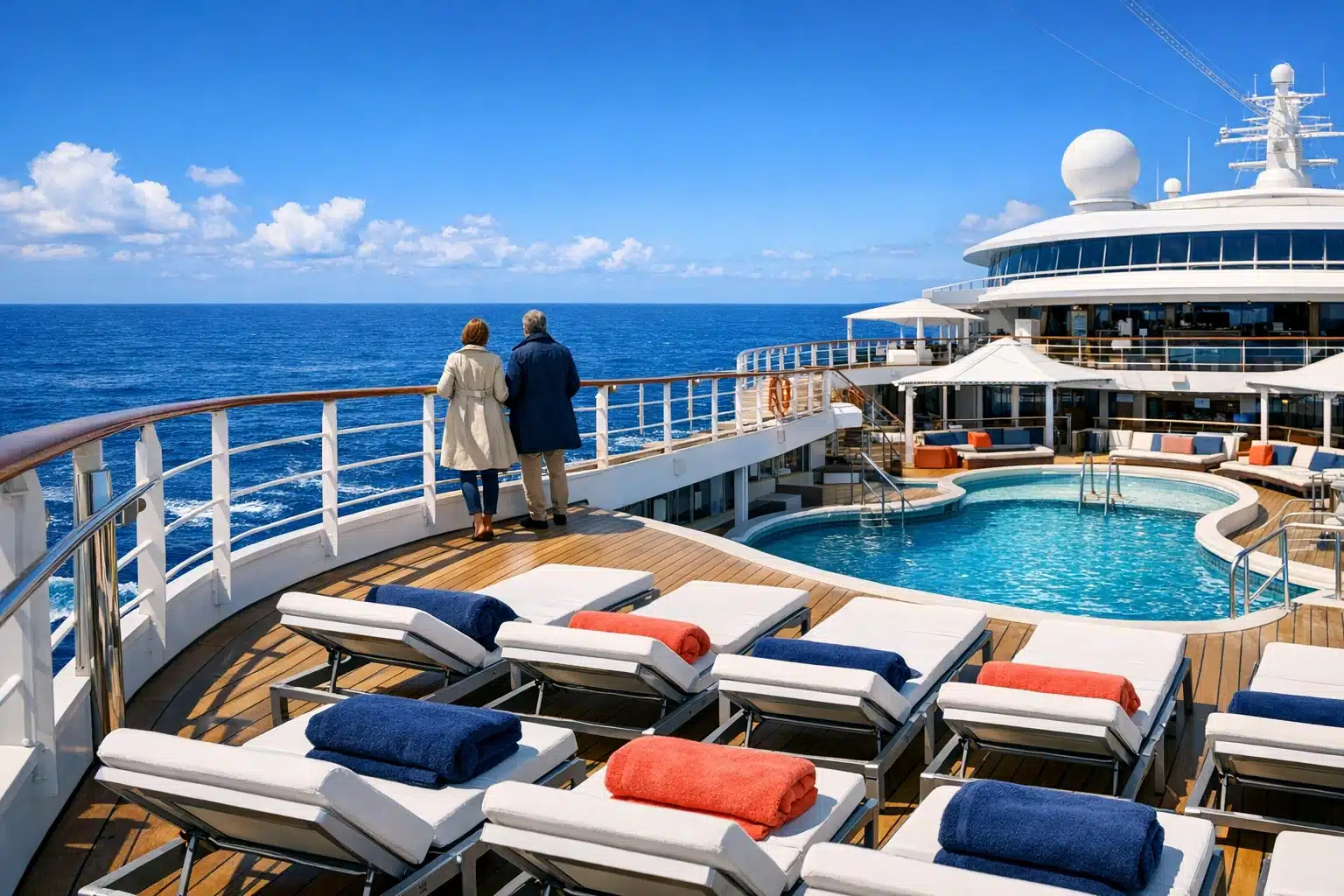
Compared with a 7-night itinerary, a 3-night cruise is less about collecting destinations and more about sampling a travel mood. You wake to the soft pulse of engines, learn the layout of the decks, and discover whether you enjoy the gentle structure of shipboard life. There is often enough time for one elegant dinner, one lazy coffee with a view, one evening show or live music set, and at least one stretch of genuine idleness by the rail. That emotional texture matters. Many first-time cruisers are not just evaluating the destination; they are testing whether they like the very idea of being carried somewhere.
It is also useful to compare a mini-cruise with a land-based city break. A city break often demands constant logistics: train arrivals, hotel check-in, restaurant reservations, museum timing, and local transport. A cruise compresses those decisions. Your room travels with you, meals are centralized, and the transition between one moment and the next is smoother. The trade-off, of course, is limited immersion in any one destination. If your goal is to understand a city in depth, a short cruise is not ideal. If your goal is to breathe differently for a few days and return refreshed, it can be remarkably efficient.
One more practical note matters for departures from Brest: Atlantic conditions can shape the experience. The Bay of Biscay and surrounding waters are not always mirror-calm. Modern ships are designed for this, but sensitive travelers should expect some movement, especially outside peak summer. For many people, that is part of the charm. The sea is allowed to feel like the sea.
Costs, Cabin Choices, and How to Judge Real Value
The price of a 3-night cruise departing from Brest can vary significantly depending on season, operator, ship type, cabin category, and what is included in the base fare. As a broad planning reference, travelers often find entry-level promotional rates for short sailings starting in the low hundreds of euros per person, while more comfortable or premium options can quickly rise into the mid or upper hundreds. If you are looking at a better-located cabin, added dining packages, or a sailing during a high-demand period, the total can move higher still. The lesson is simple: the advertised starting fare is useful, but it is rarely the whole story.
Cabin type shapes both cost and comfort. On a 3-night itinerary, some travelers are happy with the most economical inside cabin because they plan to spend most of their time on deck or in public lounges. Others strongly prefer an ocean-view cabin for natural light, especially on a short trip where every waking hour counts. Balcony cabins, when available, add privacy and atmosphere, though on a quick sailing the premium only makes sense if you know you will use it. Suites and upgraded categories may include more space, priority services, or better amenities, but for many travelers they deliver diminishing returns on such a short itinerary.
- Inside cabins usually offer the lowest fare and strongest value for budget-conscious travelers.
- Ocean-view cabins often strike the best balance between price and comfort.
- Balcony cabins suit travelers who treat the voyage itself as the main attraction.
- Premium categories make more sense for special occasions than routine short breaks.
Beyond the cabin, the key question is what the fare includes. Some short cruises bundle meals generously, while others price extras separately. Drinks, specialty restaurants, Wi-Fi, parking, shore excursions, and gratuities can all affect the final bill. On certain short sailings, entertainment and public facilities are part of the standard fare, but premium experiences are charged on top. This means two cruises that appear similarly priced can deliver very different overall value once you add realistic spending.
A useful comparison is the cost of a conventional 3-night city break. Suppose you add train or fuel costs, three hotel nights, restaurant meals, and local transport. Suddenly, a mini-cruise may look more competitive than expected, especially for couples. The ship combines transport, accommodation, and dining infrastructure in one purchase. That said, value is not only financial. It also depends on how much you enjoy the format. Travelers who love sea views, self-contained planning, and the atmosphere of departure often find strong value even when the fare is not rock bottom. Travelers who prioritize deep destination time may feel the opposite.
The smartest budgeting approach is to divide the decision into three layers. First, compare the base fare across dates. Second, estimate unavoidable extras such as port charges, transport to Brest, and any required documents. Third, decide which optional expenses genuinely matter to your enjoyment. If a balcony will make the trip memorable, it may be worth the premium. If you only need a compact break and a comfortable bed, a simple cabin may be the better strategy. Real value rarely comes from buying the cheapest option. It comes from paying for the parts of the experience you will actually use.
Planning the Journey: Best Timing, Getting to Brest, and Smart Preparation
Good short cruises depend on good timing. Because the voyage is only three nights long, even small planning mistakes can feel larger than they would on a week-long trip. The first decision is season. Spring and early autumn can be excellent for travelers who want lighter crowds and milder fares, but weather across Atlantic-facing routes can be less predictable. Summer often brings easier conditions, longer daylight, and a more carefree feel on deck, though pricing may be higher and cabins more limited. Winter sailings, where available, can appeal to travelers who enjoy dramatic seascapes and lower demand, but they require a more realistic attitude toward wind, rain, and schedule changes.
Getting to Brest is generally straightforward for travelers coming from elsewhere in France. Rail links from Paris make the city reachable without a car, and the journey is often manageable enough for a same-day arrival, though many travelers prefer to come the night before for peace of mind. Brest also has an airport with domestic connections and some seasonal options, while regional road access suits travelers from Brittany and western France. If you are driving, parking arrangements near the port should be checked well in advance, especially during busier periods. The exact transfer from station or hotel to terminal will depend on the departure point used by your sailing, so always confirm that detail directly with the operator rather than relying on generic city maps.
- Arrive in Brest early if the sailing is important to your schedule or you are traveling from far away.
- Check boarding times carefully, since cruise and ferry-style operations can close check-in well before departure.
- Verify passport, visa, and route-specific entry rules, especially if the itinerary touches non-Schengen or UK-related ports.
- Keep digital and printed booking documents accessible in case mobile reception or battery life becomes inconvenient.
Packing for a 3-night cruise from Brest should be simple, but not careless. Atlantic weather changes quickly, and even in warmer months an evening breeze on deck can feel surprisingly sharp. Layers work better than bulky items. A light waterproof jacket, comfortable walking shoes, basic smart-casual evening wear, medication, and chargers cover most needs. If you are prone to motion discomfort, pack preventative remedies before departure rather than hoping you can solve the issue on board. On a short trip, losing half a day to nausea is particularly frustrating.
Another planning point that experienced cruisers take seriously is expectations management. A 3-night sailing is not designed to do everything. It will not replicate a two-week voyage with multiple major ports, and it is not supposed to. Its strength is concentration. You board, exhale, change rhythm, and return. Once you understand that compact logic, preparation becomes easier. Choose one or two priorities rather than ten. Maybe your goal is to enjoy the sea. Maybe it is to try cruising for the first time. Maybe it is simply to give yourself a small pocket of ordered calm. Brest, with its direct maritime character, suits that mindset well. Plan efficiently, leave some white space in your schedule, and the trip becomes larger than its short duration suggests.
Conclusion: Who Should Book a 3-Night Cruise from Brest?
A 3-night cruise departing from Brest is best suited to travelers who want a meaningful break without the complexity of a long holiday. It works especially well for people who are curious about cruising but not yet ready to commit a week or more, for couples seeking a compact escape, and for busy professionals trying to use a long weekend or a few spare days efficiently. It can also appeal to travelers living in Brittany or western France who want the pleasure of departure without first crossing half the country. In that sense, the audience is clear: people who value atmosphere, structure, and convenience over exhaustive sightseeing.
For first-time cruisers, the format is almost ideal. You get enough time to test the basics that matter most. Do you enjoy sleeping at sea? Does the ship feel relaxing or confining? Is onboard dining part of the fun for you? How do you feel about a schedule that offers freedom within a contained environment? These are important questions, and a short sailing answers them at relatively low commitment. If you love it, you can book a longer cruise later with more confidence. If you decide it is not your style, you have learned that without sacrificing a major annual holiday.
This format is also strong for travelers who like travel as a mood rather than a checklist. Some people need five museums, three neighborhoods, and a detailed restaurant plan to feel satisfied. Others need a window, a horizon, a well-timed meal, and the soft suspense of arrival. A Brest departure leans toward the second experience. The city’s maritime identity gives the trip a grounded beginning, and the short duration keeps the whole enterprise light on logistics. There is a certain elegance in that. You step aboard with one bag, watch the shore recede, and for a few nights the world becomes usefully smaller.
That said, a 3-night cruise is not ideal for everyone. Travelers who want deep cultural immersion in a destination may find the port time too brief. Families with very young children may prefer more stable routines on land unless they already know they enjoy ship travel. People highly sensitive to motion should choose dates and vessels carefully, because Atlantic conditions can add movement. And travelers seeking maximum luxury for every euro spent may decide that a longer sailing offers better value per night.
For the right audience, however, the appeal is easy to understand. A mini-cruise from Brest is compact but not trivial, efficient but not sterile, and brief without feeling disposable. It offers the pleasure of transition, the comfort of contained planning, and just enough distance from routine to reset your attention. If that sounds like the kind of break you need, Brest is not just a departure point. It is the beginning of a very sensible, and often very enjoyable, small adventure.